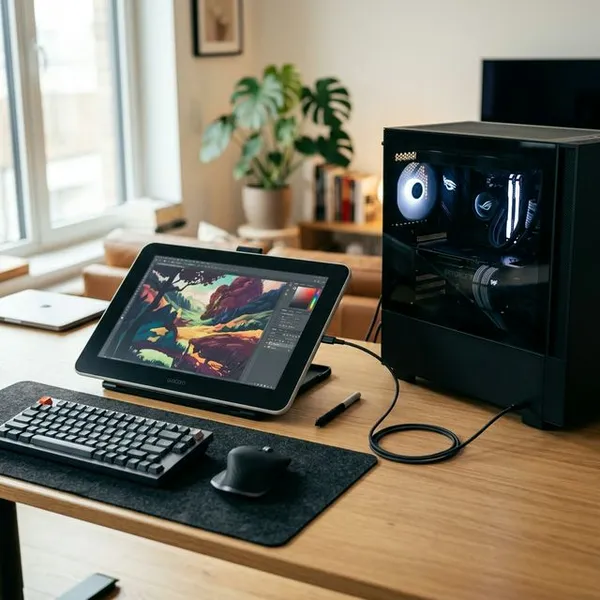
Lately, I have been handing more and more work off to AI agents.
The work itself is much easier. The odd part is that I now spend more time staring at a screen while an agent runs, then reaching for my phone during every spare second. My screen time seems to have gone up, not down.
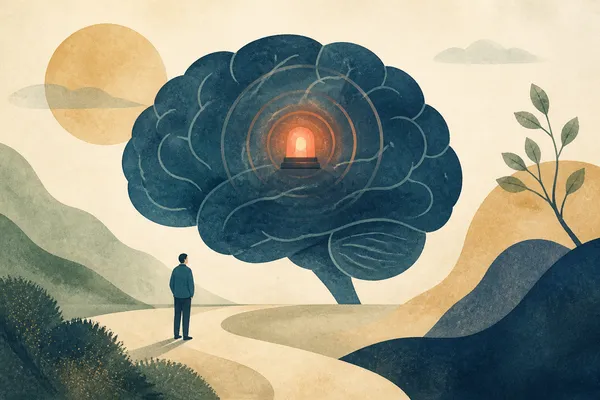
That made me wonder what this constant connection to AI is doing to my focus and mental health. Anders Hansen’s The Attention Fix, published in Japan as Smartphone Brain, was a useful book to revisit. It is ostensibly about phones, but the argument feels more urgent now that AI is part of my daily work.
Running the latest AI on a 10,000-year-old brain
The premise that stuck with me most was that the human brain has not changed much since our hunter-gatherer days 10,000 years ago.
Our brains are still built for life on the savanna. Meanwhile, we carry phones with an endless supply of information and stay connected to AI agents at work. Quite a mismatch.
It also explains a few habits I would rather not admit to. I open another tab without thinking. I cannot wait a few seconds for an agent to reply without checking my phone.
It is easy to blame this on weak willpower, but the brain is wired to notice new information. Modern apps and services are built to take advantage of that wiring.
Smartphones and stress
Chapters 2, 5, and 6 cover stress, screens, social media, and mental health. I was particularly interested in the HPA axis, the system involving the hypothalamus, pituitary gland, and adrenal glands that controls much of our stress response.
This system developed over millions of years. If one of our ancestors suddenly met a lion, the HPA axis would release cortisol. Heart rate went up, blood moved to the muscles, and the body prepared to fight or run. It was a survival mechanism for an immediate threat.
The problem is that smartphones and social media can keep the same system busy all day.
Humans survive in groups. For our ancestors, being pushed out of the group could mean death, so social status mattered. The book argues that our brains still treat a threat to our place in the group as a serious danger. A social media feed offers an endless supply of other people to compare ourselves with, usually when they are showing the best parts of their lives.
Phones are also a huge source of dopamine. Hansen cites a study in which people’s cortisol levels rose within ten minutes of having their phones taken away. The brain reacts as if something necessary for survival has disappeared.
When cortisol stays high and the brain keeps sensing danger, sleep and digestion get pushed down the priority list. The book uses this mechanism to explain how chronic stress can contribute to depression.
Late-night blue light adds another problem. It tells the brain that it is still daytime, suppresses the hormones involved in sleep, and may raise cortisol as well. The body stays alert when it should be winding down.
Teenagers are especially vulnerable because the prefrontal cortex, which helps control impulses, is still developing. They have social comparison on tap, plus a screen that can keep them awake well past bedtime. Social media was still in its early days when I was a teenager. I am glad I did not have to deal with the current version of it.
Then I checked my own screen-time report. I had been telling myself I did not use my phone that much. The numbers disagreed. Quietly depressing.
Smartphones and focus
The chapters on smartphones and concentration hit even closer to home.
The brain gets restless at the thought that a notification might be waiting. According to the book, even a phone set to silent and left in a pocket consumes some mental capacity. Part of the brain is still working to resist looking at it.
Moving back and forth between a phone and a PC also creates a multitasking problem. Hansen describes multitasking as relying more on the striatum, while focused work relies more on the hippocampus. The hippocampus is better at building long-term memories.
I can see this in my own work and study sessions. I put my phone face down because I want to concentrate, but it is still on the desk. If a notification arrives, I look. If nothing arrives, I sometimes pick it up anyway. Turning it over is not much of a barrier.
AI has added a new version of the same habit. I keep opening a device to see whether an agent has finished, then bounce between my phone and PC. No wonder studying goes nowhere.
The book also discusses the Google effect: when information is always searchable, the brain becomes less likely to remember the information itself.
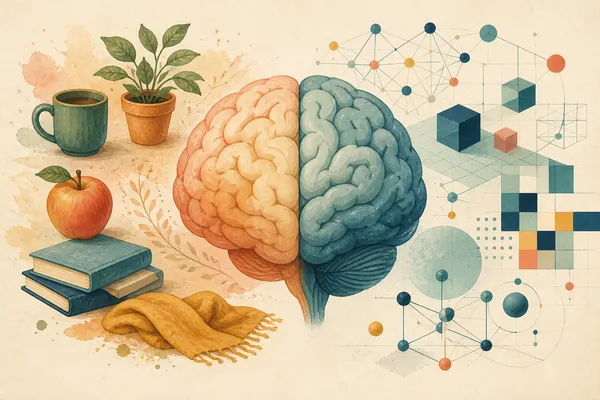
AI goes much further than search. It can summarize, compare, brainstorm, and write code. I have developed a habit of sending questions to AI before I have tried to think them through myself. It is almost too good at outsourcing thought.
It is easy to imagine AI pushing the Google effect further. If an answer appears without even doing the search, will the brain bother retaining any of it? That sounds funny until I remember how many times I have asked AI something I could have figured out with a minute of thought.
I am not going to stop using AI. I do want to draw a line before I hand over the whole thinking process. At a minimum, I should decide what I want to ask and how I want to ask it. That part stays with my brain.
Exercise as a countermeasure
From Chapter 8 onward, the book leans hard on exercise as an answer to poor concentration and mental health problems.
Hansen says even a few minutes of movement can help with focus. He also recommends exercise that raises the heart rate for about 45 minutes, three times a week, as a kind of airbag against stress.
Honestly, exercise starts to sound like a cure for everything. I caught myself wondering whether this was setting up Hansen’s other book about exercise and the brain. There is also an obvious chicken-and-egg question: perhaps people who can maintain an exercise routine already have better mental health.
Still, dismissing all of it would be lazy. The studies discussed in the book found improvements in concentration and depressive symptoms among people who exercised. The evolutionary explanation also makes some sense. Our ancestors needed their sharpest focus while moving, hunting, or getting away from danger.
Running outside is a high bar for me. I can blame the lack of a good route, but that is mostly an excuse. Putting on a VR headset for a boxing workout and getting my heart rate up sounds much more realistic.
Analog habits worth keeping in the AI era
Technology is moving quickly. Our brains are still analog, and daily exposure to phones and AI will not automatically make them catch up.
For now, my rules are small: check my screen time, keep the phone away while sleeping or studying, and think for ten minutes before opening AI. This sounds manageable. We will see.
If I want to keep control of my own thinking, I need to understand how easily my attention can be pulled around. That is why The Attention Fix feels more relevant now that AI has become an everyday tool.