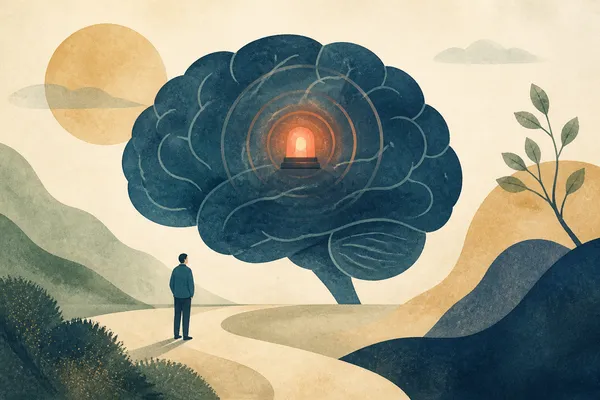
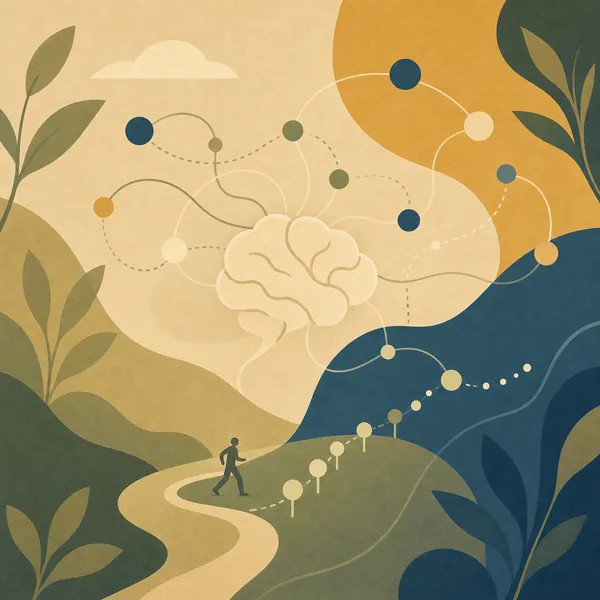
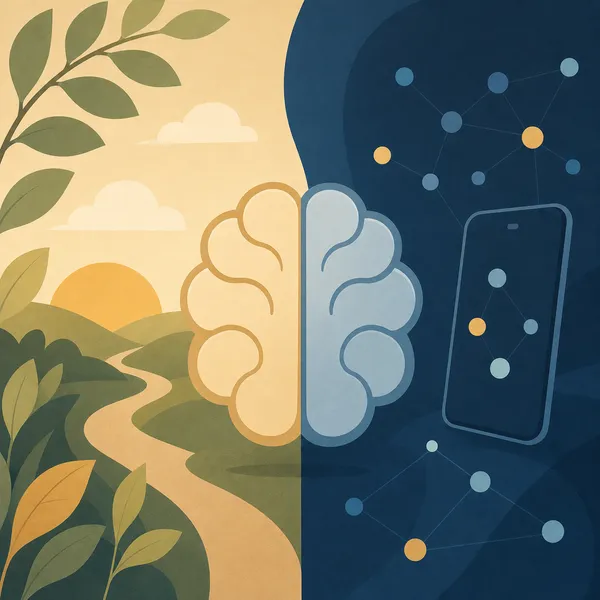
I read Takeshi Yoro’s The Wall of Fools (Baka no Kabe). “The Wall of Fools” refers to the function of the brain where it only accepts information that aligns with itself and blocks out information it doesn’t want to know.
Hearing this, I was reminded of the “echo chamber” phenomenon in the modern internet. Only information convenient to oneself is displayed, and by interacting only with like-minded people, one’s own ideas are reinforced. Echo chambers seem to be this human nature of “The Wall of Fools” further accelerated by algorithms.
While I agreed with many parts of the book, there were also parts where I thought, “Is that really so?” organizing my notes, I will write about some factors and points of discomfort.
The Equation of the Brain: y = ax
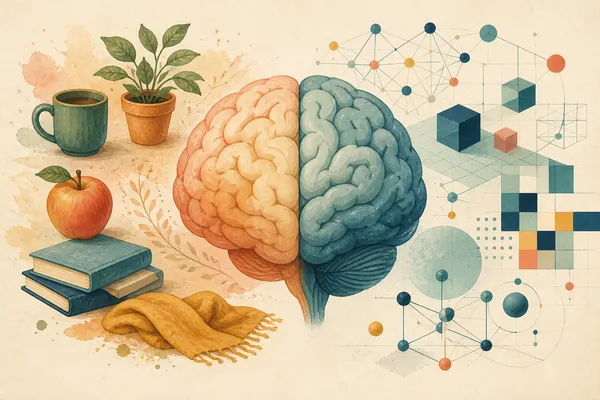
The part of the book that clicked the most for me was the explanation of brain function using the linear equation $y = ax$.
y: Reaction (Understanding)a: Coefficient (Interest/Concern)x: Information (Input)
Depending on the person, what this coefficient a is directed towards differs.
No matter how much you listen to something you have no interest in (a=0), your understanding (y) remains zero. Conversely, “otaku” (enthusiasts) who are interested in a specific field can be said to have an extremely high a for that field.
When we feel that “talking to someone is pointless,” it might not be that the other person lacks understanding, but simply that the magnitude and direction of our mutual “coefficient a” are different.
Factors Thickening the Wall: Brain Changes and Urbanization
The author also states that there are modern-specific changes behind the formation of “The Wall of Fools”.
Changes in Brain Development There is a point that modern people have slower development of the frontal lobe (the part responsible for endurance/patience) compared to the Showa era. If development here is delayed, it becomes easier to lead to short-tempered behavior like “snapping”. These changes may also be involved in the formation of walls, such as not listening to others or shutting oneself in one’s shell.
Urbanization and Loss of Physicality It is also mentioned that opportunities to move the body have decreased due to urbanization, and the treatment of the body is being neglected. We tend to try to control even sleep, which is originally a demand of the body, by consciousness. The author develops an argument from here that “a community cannot be maintained in a society that ignores the body and the unconscious,” but honestly, I didn’t quite understand the connection between this “body/sleep” and “community”. (Maybe my understanding was insufficient, or I was half asleep…)
Discomfort with Education: “Individuality” and “Nature”
From here on, these are the parts that caught my attention while reading.
Emphasis on “Individuality” and Common Understanding The author states, “In the past, common understanding was emphasized, but now individuality is emphasized too much, so common understanding is being neglected.” Honestly, I couldn’t agree with this very much. Even if individuality is emphasized, classes for common understanding like moral education still exist, and I feel… isn’t that enough?
However, I strongly agree with the point that “the essence of language and logic is to expand ‘common understanding’.” If we think like Saussure’s philosophy that “meaning (= common understanding) draws the boundary lines of a group,” nurturing common understanding leads to uniting the group. Moving away from this may cause conflicts within the group and become a cause for generating “The Wall of Fools”.
“Fake Nature” and Biased Education The point about nature education made me think in a different sense. The author states that the “nature” taught in schools is too neatly arranged. Instead of the original muddy nature that doesn’t go as planned, we are teaching managed, safe “fake nature”. I personally feel this is even harmful.
Also, the criticism of the system where one is evaluated only by study on paper (deviation score) without learning from real things (actual objects) stings. This creates humans who are only good at “paperwork” and cannot deal with the complexity of reality. This attitude of “not looking at real things” is probably contributing to the stiffening of thinking. As someone who has done things only on paper, my ears are burning.
What Lies at the Root: “Justice” and “Common Sense”
Finally, a consideration of religion, justice, and solutions.
Monolithic religions (Christianity, Islam, or even scientism) under the name of “there is absolute truth” can, in a sense, invite a suspension of thought and build a strong “Wall of Fools” between others. This is in contrast to polytheism not relying on “absolute truth”.
This also applies to the word “justice”. Personally, I feel that the word “justice” itself has a monistic ring to it. Because it stands on the premise that “absolute correctness (justice)” exists in this world. However, one person’s justice may be injustice to another. The moment we absolutize “our justice,” dialogue with the other party becomes impossible. This seems like the true nature of “The Wall of Fools”.
So, how can we overcome this wall? The author states that the key is “common sense,” not logic in the head like God or absolute justice.
Common sense here does not mean social manners. It refers to a universal sense rooted in our physicality, “this is how it usually is if you are human.” Common items possessed by the “body” before logic, such as pain, cold, and sleepiness. It may be that only this “common sense based on the body” can connect people beyond conflicting monism (logic in the brain).
Conclusion
We may not be able to completely eliminate “The Wall of Fools”. As long as we are human, it is unavoidable to be interested in something and ignore something else.
Still, we can realize that “I might be building a wall.” Instead of swallowing the information that comes in as it is, stop and think for a moment. Try not to think “absolutely correct”. I thought that we have no choice but to deal with our thinking habits in this way.